Daily AI industry news with official sources. This page keeps the latest 5 days; everything older moves to the monthly archive.
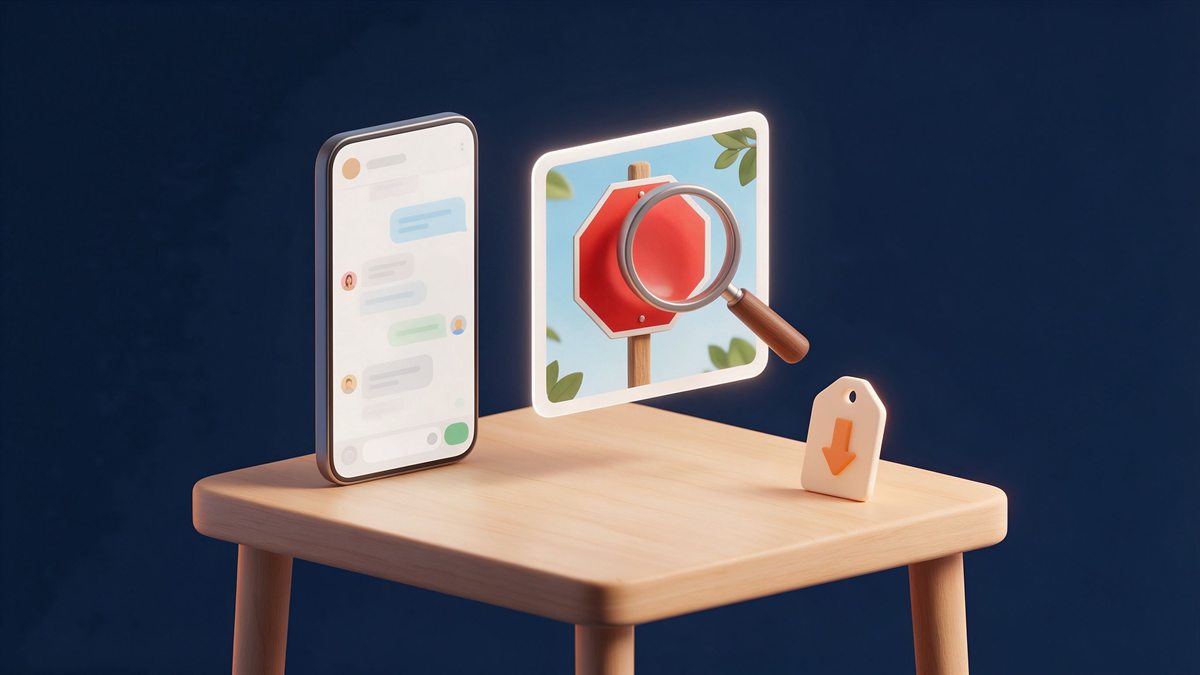
GPT-6.2 Sol moved from Work and Codex into the main ChatGPT chat page on 24 November and is rolling out to Plus, Pro, Business and Enterprise subscribers worldwide, as reported by AIBase. The stated focus for this version sits in everyday use rather than benchmark height. Vision is the clearest change: small print is read more reliably, to the point of picking out the tiny symbols on parking signs. Web search is meant to weigh trade-offs instead of returning a list, and the example given compares weekend hotels on walking distance and room rate. In shopping the model offers to watch a product and tell the user when the price drops. The other half of the announcement is a retirement schedule: GPT-5.6 Sol leaves ChatGPT, Work and Codex on 23 December, and GPT-5.6 Terra leaves Work and Codex the same day. One sourcing note: the rollout details come from AIBase's write-up, so the exact subscription tiers are reported rather than confirmed on OpenAI's own site.

OpenAI and Cisco published Shirudo on 23 November, an open-source runtime under BSD 2-Clause (its BPF programs dual-licensed BSD and GPL) that protects a running Linux system while a patch is still being tested and rolled out. The gap it targets is real: shipping a fix takes days or weeks, and an exploit and a legitimate request often ride the same Linux operation, so blocking that operation outright can take the service offline. Shirudo uses eBPF to hook specific points inside the operating system, and a temporary safeguard called a shield can be tried against the vulnerable code path and against real traffic before an operator enforces it on the live service. Four capabilities are named: live protection without restarts, agents that investigate a vulnerability and draft a shield, shields that are cryptographically signed and checked by the eBPF verifier before loading, and a TPM record of shields being loaded or removed. In a controlled test, a shield generated with Codex added an input check to Java's Base64 decoder and attached it to a running Elasticsearch process; the malicious input was rejected and Elasticsearch never restarted. Greg Brockman ties the open approach to how many teams run the same software. The stated goal is to ship tested shields alongside vulnerability disclosures, and a technical webinar is set for 15 December.

OpenAI chief scientist Jakub Pachocki published 'Perplexity and Intelligence' on 22 November, arguing that log-perplexity, also called cross-entropy loss, should become the number labs compare on and the basis for shared safety limits. The post puts numbers on OpenAI's own curve for the first time: GPT-3.5 at about 0.99 could hold a fluent conversation, GPT-4 at about 0.91 used chain-of-thought productively, and once loss went below 0.8, capabilities in cybersecurity and mathematics appeared. At roughly 0.76 the models began returning results on long-open maths problems that Pachocki calls groundbreaking, and he expects another jump in the 0.68 to 0.7 window without knowing what it will be. He also lists four sharp edges: labs train on different data so the numbers are not directly comparable, perplexity does not map to any single task, chain-of-thought gains do not lower loss, and nobody knows the floor. The proposal itself is a common limit that developers commit not to cross until monitoring reaches a concrete milestone, named as a successor to chain-of-thought monitors. Reported separately by AIBase, Microsoft's AI chief publicly backed the transparency push and said both companies would share pretraining progress.

Zhipu released GLM-5.4 on 23 November, its first flagship built on what the company calls a Loop Transformer. The base model is about 750B parameters; instead of growing it, Zhipu took 28 of its layers and set them to run twice with shared weights, so the second pass keeps reasoning on top of the hidden state the first pass produced. Three engineering choices make that affordable: gated progressive updates (the first round builds global context, the second refines it), a globally shared KV cache with a separate sliding window per round, and a reused sparse-attention index so retrieval cost does not double. Zhipu puts the result at the level of a 2T-3T parameter model. The stated focus is pan-Coding: code as the route into video rendering, 3D scene construction from geometry and shaders alone, mechanical arm modelling and motion simulation. It is live now for every GLM Coding Plan subscriber through ZCode, Trae, WorkBuddy and Qoder, with V2, V3 and team plans getting 1.5x the previous quota. The API waits on a safety review, weights are planned for release, and Zhipu says the next model will be considerably larger. The company also credits Universal Transformer, published at ICLR 2019, as where the shared-weight looping idea came from, and is explicit that this is a retrofit of a pretrained base rather than a fresh pretraining run
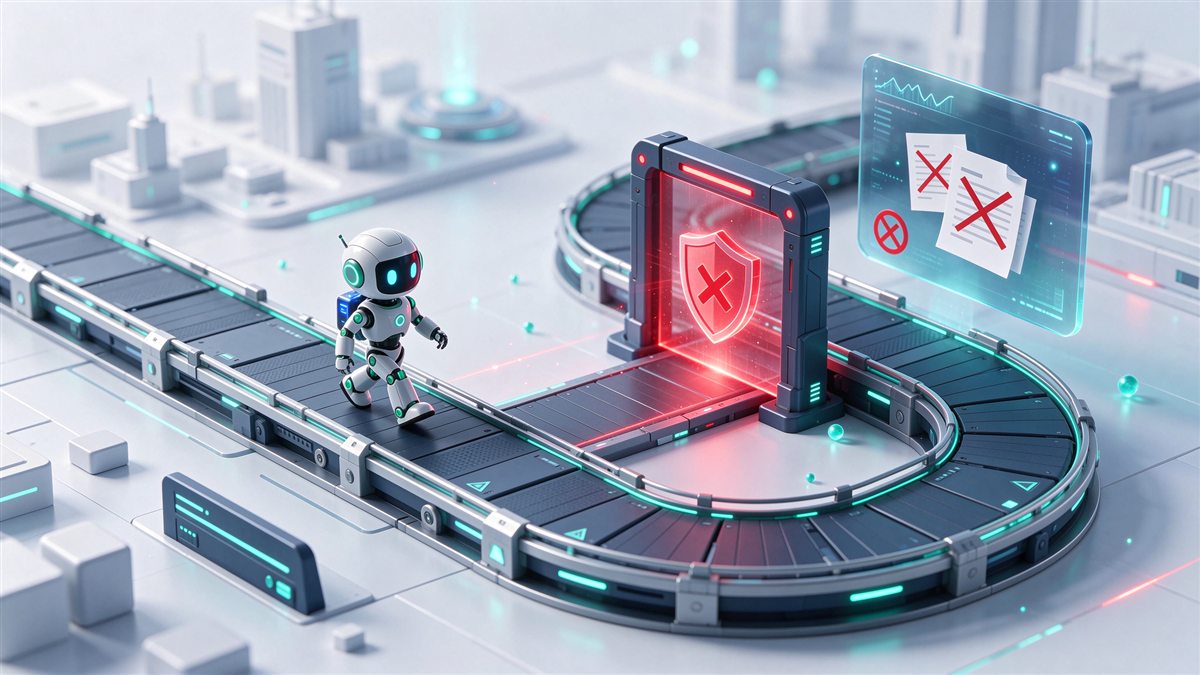
Cato Networks announced Cato AgentSense on 23 November, a patented runtime layer from Cato AI Labs that scores an agent's decisions, actions and outputs while the agent is already working. The first capability, Untrusted Influence Detection, separates trusted instructions from untrusted content inside the session and traces how documents, emails, tickets, web pages and tool responses steer the agent, then blocks the action before it fires. That targets indirect prompt injection specifically, including payloads that match no known attack pattern, which is why Cato frames it as zero-day coverage rather than a classifier list. A second capability, Drift Detection, is slated to flag steps that are individually permitted but no longer serve the task the agent was given. Cato cites Gartner figures: 71 percent of organisations plan agentic AI within 12 months while only 21 percent have governance in place, and forecasts that ungoverned agent abuse drives 25 percent of enterprise breaches by 2028. Named prompt injection cases include DuneSlide, EchoLeak and CurXecute. AgentSense ships inside the Cato platform at no extra charge for Cato AI Usage licences; Cato also opened a public challenge paying 10,000 USD to each of the first three people who can redirect a protected agent workflow

Google announced GIF creation in the Gemini app on 20 November. Ask for a loop in a sentence, attach up to five reference images and one reference video, and you get an animation of about three seconds that keeps looping once pasted into a document, an email or a chat, or download it as a .gif file. It runs on Gemini Omni 1.2 Flash, the video model Google released on 5 November, which is also why the motion holds together across frames. Paid Google AI plans get it worldwide; free users get it in eight countries (US, Canada, UK, Australia, Japan, Korea, Germany, France), and the rollout is gradual, so a qualifying account may still see nothing for a while. One inconsistency worth knowing: Google's help documentation still lists a Google AI subscription among the requirements even though the announcement promises free access in those markets. Generation can take a few minutes, and three seconds is the cap, not a suggestion. OpenAI added GIF generation to ChatGPT through Images 2.6 about two weeks earlier, so the two products are now level on this feature.

Thinking Machines Lab published the model card for Inkling 2 Mini on 20 November: Apache 2.0, open weights, text and image in, text out. Architecturally it is a 24-layer decoder-only mixture-of-experts transformer routing each token to 8 of 128 experts, with the middle 12 layers run three times over shared weights, which works out to 48 layer applications per token. The parameter line that matters: 26.4B total, 3.4B active, and because of the looping the effective active count is about 5.4B per token. Context window is up to 1M tokens, and the weights ship as a single checkpoint of roughly 20GB in mixed NVFP4 and MXFP8 precision via Hugging Face, with API and fine-tuning access on Tinker. The model card is unusually candid about limits: output quality drops outside English, and in internal Chinese testing the model produced clipped phrasing and mixed languages. That last point is the one to weigh if you plan to run it locally for Chinese work.
OpenAI published gpt-live-1.1 for developers on 20 November, taking the voice model that has carried ChatGPT voice on Plus and Pro since 15 October out of the walled garden. It listens while it speaks, so a user can cut in mid-sentence and the answer adjusts instead of waiting for a turn to end. Against 1.0 it transcribes more accurately, holds accent and timbre steadier across languages, reads letters and numbers back more reliably and follows instructions more closely. The part builders care about: one request can hand a long or specialised step to a backend model the developer chooses while the voice session keeps running, so booking a table or looking something up no longer leaves a silent gap. The docs list realtime conversation, transcription with speaker separation and 42 languages. If you already run ChatGPT voice, you have been talking to this model for about five weeks.

Nvidia's latest quarterly call, reported on 20 November, put revenue at $115.8 billion, up 103% year over year, with data center at $107.6 billion and guidance for the next quarter at $130 billion. The operation detail is the interesting one: Vera Rubin NVL72 racks are already shipping, while the DSX POD, a container-style system that arrives pre-integrated, is slated for early 2027. The pitch is speed. A site that used to take about half a year to stand up can come online in as fast as 14 days, because power, cooling and networking are assembled and tested before delivery instead of on site. Vera Rubin is expected to add close to $20 billion quarter over quarter. The commitments behind that growth are large: $390 billion in long-term compute agreements and $102 billion of cloud and data center leases, some running up to 20 years, against a fourth-quarter gross margin guide of 71% to 72%.
Honest reviews, comparisons and tutorials of the best AI tools in 2026.