
Older entries, kept by month for reference.

Anthropic priced its IPO at $83 a share on 18 November, above the $70 to $78 range it had been marketing, and sold 980 million Class A shares for about $81.34 billion, the largest public offering on record, ahead of SpaceX's $75 billion in June. Add the $26 billion private placement and the deal reaches roughly $107.3 billion. Trading under ANT on Nasdaq on 19 November, the stock opened at $111.50, up 34%, peaked at $115.10, briefly pushing the market value past $2 trillion, and closed at $97.17, up 17.07% on the day, for a market value near $1.271 trillion on 13.24 billion shares, twelfth among listed companies worldwide. Volume was about 855 million shares. The nine months to 30 September brought $33.24 billion of revenue, roughly 12 times the year before. By the next morning the stock was down about 10% in premarket at $87.50, back below its first-day close and close to the IPO price.
Google released Gemini 4 Neon on 19 November, six days after Gemini 4 Hydrogen and 28 after Gemini 4 Carbon, the fastest turn in this generation. It reaches Google AI Pro and Ultra users through the Gemini app, AI Studio and Antigravity, and developers through AI Studio, the paid tier of the Android Studio API and Gemini for business. The model runs at four thinking levels, from a quick pass to a long deliberation, so the same endpoint covers a chat reply and a multi-step agent job. Arena measured it at 1,336 on its Agent Arena Index, second overall across 4,200 real agent sessions, at a median $2.82 per task, 53% less than the third-place Claude Opus 5.5 (Max). At the high settings it also sits on the Pareto front of the Vals index and Agent Arena, with cost per task 50% to 80% below the leading frontier models there. Read those numbers as Arena's scoring on its own task set, not a general ranking.

OpenAI released GPT-6.2 Astra and GPT-6.2 Sol on 17 November. Astra targets complex professional and scientific work, Sol targets everyday multi-step tasks, and both reach ChatGPT Work, Codex and the API as gpt-6.2-astra and gpt-6.2-sol for Plus, Pro, Enterprise and Edu users, with workspace admins needing to switch them on. Fast and Ultrafast modes are included, Sol on the Pro 200 plan among them, and API calls are 50% off for three months. Astra lists at $8 per million input tokens, $0.40 cached input and $40 output, which is 20% below GPT-6 Astra and 60% lower on cached input; Sol keeps GPT-6.1 Sol at $2, $0.10 and $10. On OpenAI's numbers Astra adds 5.2 points on Agents' Last Exam over GPT-6 Astra and sits 5.5 ahead of Claude Fable 5.2, lifts Terminal-Bench Science 0.1 by 9 points, takes first on Artificial Analysis 3D and second overall on its Intelligence Index at 62, all at under a third of GPT-6 Astra's cost per task. Sol lands within half a point of Astra on FrontierCode 2.0. The system card puts biochemical capability at High and cybersecurity at Critical, and an 22-point jump on ExploitBench Internal Port brought tighter safeguards. Astra is also the first publicly released model rated High on AI self-improvement, which is why OpenAI describes isolation, monitoring and a stop control around its research use.

At Ignite 2026 in San Francisco on 17 November, Microsoft introduced seven MAI models across five lines plus MAI Licensed Weights. MAI Code 2 and MAI Code 2 Flash are generally available in GitHub Copilot's model picker and inside Copilot Fusion, and also in Foundry. Microsoft reports Code 2 at a 63.2% average pass rate over four coding benchmarks against 64.1% for GPT-6.1 Sol and 65.3% for Claude Opus 5.5, at $0.309 per task versus $0.761 and $6.306, and its own comparison with the previous MAI coding model puts SWE-bench Pro (Hard 51) from 29.4% to 62.7%, Terminal-Bench 2.1 from 39.5% to 55.8% and tool calls per task down 55% to 62%. Read the price carefully: $0.50 input and $2.50 output per million tokens is a 50% promotional rate that doubles on 17 May 2027 to $1 and $5, with cached input moving from $0.025 to $0.05; Code 2 Flash runs $0.05 and $0.25 now, $0.10 and $0.50 later. Around it, MAI Cyber 2 Flash scores 92.3% on CyberGym-E2E against 91.5% for GPT-6 Astra at under 2% of the cost per task and stays inside Microsoft's security products, MAI Image 2.7 does 2048x2048 with transparent backgrounds at roughly $35 per 1,000 images, MAI Realtime 1 starts at $0.01 per audio minute in a limited Foundry preview, and Microsoft-Decision-1.1 is out of preview with multimodal support and more than 4,000 customers so far. Copilot Fusion Max puts Terminal-Bench 4.1 at 71.2%, 5.4 points over Fable 5.2 at 88% lower cost.
Alibaba's Model Studio console lists qwen4-max as the new flagship, dated November 16. The spec line reads 2.4 trillion total parameters, native image and video understanding, 1 million token context and 128K maximum output, with both thinking and non-thinking modes. The console description covers coding, office work, front-end design and long agent tasks, plus web search, tool calls and structured output, and says the model speaks the OpenAI and Anthropic API protocols. The price page puts input at 10 yuan per million tokens and output at 30 in the global deployment scope. Cache hits bill at 0.5 yuan per million, a 5-minute cache write at 12.5 yuan and a 1-hour write at 20. The previous flagship, qwen3.8-max, sits at 12 and 36. No open-weight release for this checkpoint is listed; the open 2.4T sibling on the same page is qwen3.8-2.4T-A95B, a 95B-active MoE with 1M context.
MLCommons published the MLPerf Training v6.1 results on November 16. NVIDIA's Vera Rubin NVL72 made its debut and, per NVIDIA's write-up, delivered up to 2x more performance per GPU than GB300 NVL72; NVIDIA was the only submitter with a result on every benchmark in the round. On DeepSeek-V3 671B, Vera Rubin scaled from 256 to 1,024 GPUs at about 97% efficiency, cutting training time from 16.12 minutes to 4.14. The largest run used 10,240 GPUs, submitted by NVIDIA on GB300 and matched by Microsoft Azure on GB200. Two other numbers matter: Vera Rubin finished the new Qwen 3.5 397B GRPO reinforcement-learning post-training benchmark in 10.44 minutes at 1,024 GPUs, and Google's Ironwood TPU trained DeepSeek-V3 to target quality in 1.70 minutes across 8,192 chips, with its RL run at 18.02 minutes on 640 chips. Twenty organizations submitted, among them ASUS, Azure, CoreWeave, Dell, HPE, Lambda, Nebius, Oracle, Supermicro and Google Cloud.

The model-release page on ByteDance's Volcengine Ark, updated November 15, adds doubao-seedance-2-5-flash-261115 under the Seedance 2.5 video line. The listed capabilities are text-to-video, first-frame and first-and-last-frame video, all-modality reference-to-video, video editing and video extension. Two limits come with it: it does not support sample mode, and output resolution stops at 480p and 720p. That contrasts with the main Seedance 2.5 checkpoint released June 28, doubao-seedance-2-5-260628, which extends a single generation to 30 seconds with multi-round extension, accepts up to 50 multimodal reference assets in one call, and offers timestamp-based precise editing. The announcement itself carries no benchmark numbers, but the Ark price page already lists the Flash build at 46 yuan per million tokens without video input and 28 with one, which works out to 2.21 yuan for a 5-second 480p clip and 4.97 yuan at 720p. So the cheaper-named build is also the narrow one: a lower resolution cap and no sample mode.

The same November 15 announcement on Volcengine Ark lists doubao-seed-evolving as updated. The stated changes sit in three places: multi-step task planning and result acceptance become more complete, tool calling and factual consistency improve noticeably, and response latency and per-call cost fall in most scenarios. There is no new model ID to adopt. The upgrade is automatic and the same doubao-seed-evolving identifier returns the latest version, which also means an integration cannot pin the change down to a date or roll back to the previous behaviour by name.
Edge0 (the AutoArk team) put Edge0-145B and Edge0-120B on Hugging Face on November 11, shipped GitHub release v0.2.0 the same day and published the write-up on November 12, calling Edge0-145B the world's first open-source on-device model with 145 billion parameters. The architecture is a latent sparse mixture of experts: 145B total with 10.12B active per token, 48 layers, 512 experts per layer with 10 routed plus 1 shared expert, a 256K context window, and training done natively at 4 bits. The two released builds are Q3_K at 40.81 GiB and NVFP4 at 47.79 GiB. The model card measured on an RTX 5090 puts Q3_K at 121.2 tok/s decode with 3,554.9 tok/s on 16K prefill, and NVFP4 at 98.3 tok/s decode with 3,165.7 tok/s prefill. The launch post claims 29GB peak memory on a compatible laptop, 1,100+ tok/s prefill, 80+ tok/s decode, about 120W typical power and a 128K to 256K window, while a comparison paragraph elsewhere in the same post says 28GB and the spec table names no specific machine, only a category. The licence is narrower than the word open-source suggests: the Edge0 Community Model License 1.0 covers only Edge0's own contributions, everything derived from Qwen stays under the Qwen Community License 1.0, and the licence text says permission from Edge0 is not permission from Qwen. By November 14 the two builds had 61,192 combined downloads on Hugging Face and the GitHub repository had 11,379 stars. The smaller Edge0-35B runs under 2.5GB at 37+ tokens per second on an iPhone 18 Pro Max, though the post notes those figures come from different models and hardware.
The Qwen Code documentation now lists a 1.0 Preview that brings Qoder's agent-harness capabilities together with Qwen Code in a single open-source release. On first launch the CLI asks which model provider to use: a Qwen account with a Plus or Pro subscription from chat.qwen.ai, QwenCloud (Token Plan or a standard API key, with China and international platforms chosen explicitly), Alibaba ModelStudio (Coding Plan, Token Plan or a standard API key, Beijing or international), built-in third-party providers that include DeepSeek, Grok, MiniMax, Z.AI, Kimi, Idealab, ModelScope, OpenRouter and Requesty, and a custom provider entry for a local server or proxy. The agent ships built-in Skills and SubAgents, a Claude Code-style workflow, headless runs through the -p flag for scripts and CI, IDE integrations for VS Code, Zed and JetBrains, and a developer SDK published on npm as @qwen-code/sdk. Documentation presents QwenCloud as the recommended setup and notes that the framework and the Qwen models are open-source and ship together.

Jimeng's own Seedance 2.5 page now advertises cinematic 4K output, and the launch post lists two limited-time rates: about 0.15 yuan per second for Seedance 2.5 and 0.08 yuan per second for the Flash build. The workflow is unchanged, a 480p draft followed by a native upgrade of the same take, so 4K is a finishing step rather than the first render. 4K does not travel to the API. Volcengine Ark's Seedance 2.5 endpoint tops out at 1080p at 10-bit, its 2.5 Flash build stops at 720p, and the only 4K path on the API is the 2.0 endpoint, where 4K caps RPM at 15 and concurrency at 1 per account. Dreamina, the international face of the same product, lists Seedance 2.5 4K as live worldwide.
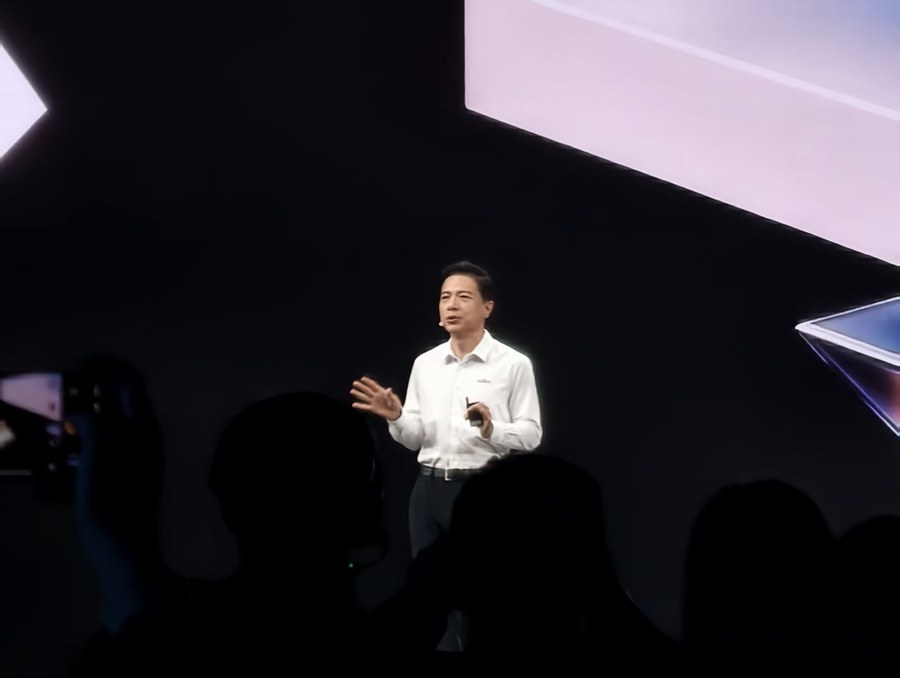
Baidu said on November 14 that the token exchange it launched at Baidu World 2026 on November 12 drew more than 100 new supplier applications and more than 1,000 new clients on its first day. The platform now lists more than 40 models, spanning DeepSeek, Kimi, Zhipu GLM, MiniMax and video models alongside Baidu's own ERNIE line, with both model makers and resellers among the suppliers. It runs on two functions: verification, where every supply resource goes through model-fingerprint comparison plus capability, performance and availability tests before onboarding, and credit rating, built from periodic spot checks and real-time monitoring of every call in the chain. During its trial period the platform already carried more than 100 supply resources, over 50 million calls a day and more than 700 billion tokens a day, a figure founder Li Yanhong used on stage to argue that resellers who cannot prove which model they serve are the real problem in the market.
Google announced Gemini 4 Hydrogen on November 12, the successor to Gemini 3.8 Flash and the fast-execution model of the Gemini 4 family. In the default high thinking mode it finishes tasks 2.5 times faster than 3.8 Flash, and Terminal-Bench 4.1 rises from 18.2% to 57%. Google says fabricated output drops by more than five times. On the Artificial Analysis Intelligence Index the high mode scores 51 and the new xhigh mode 54, both ahead of Gemini 4 Argon at 50. Input, thinking and output share a 1M-token window. API pricing is $1.50 per million input tokens and $7.50 per million output, above the $0.75 and $3.75 of 3.8 Flash, whose discount ends December 31. The model is rolling out worldwide in the Gemini app, Google Search, AI Studio and the Gemini API, and free users reach it through automatic model selection. In Antigravity, Google added Orchestrator, which switches between Carbon and Hydrogen inside one session: success rate close to Carbon alone, 24% less quota used and 19% faster completion, open first to Ultra subscribers.
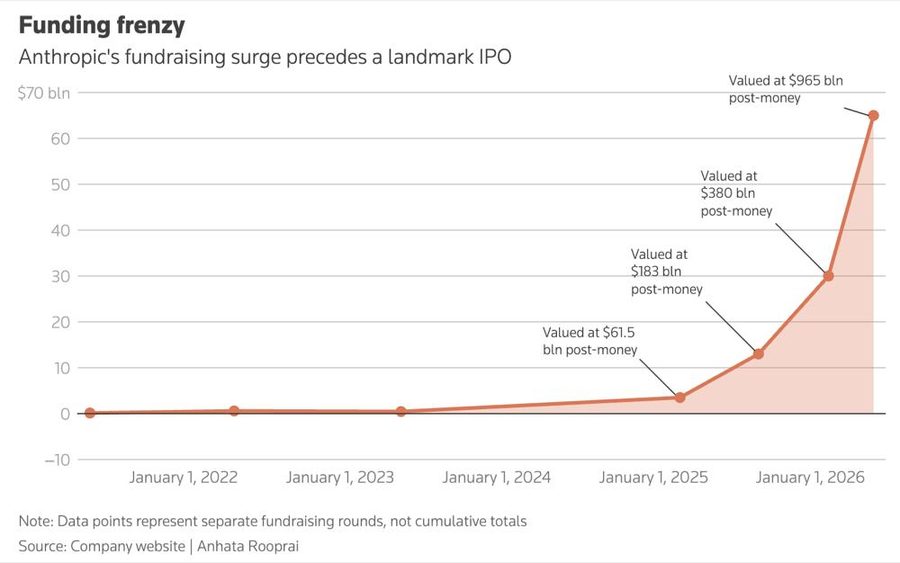
On November 13 reports said orders for Anthropic's IPO reached roughly six times the shares on offer. The deal prices 825 million shares at $70 to $78, raising up to $64.35 billion, alongside a $26 billion private placement to Google, Nvidia, AMD, Microsoft, Broadcom, Micron and TSMC, for about $90 billion in total and a fully diluted valuation near $1.4 trillion. The annualized revenue run rate was $81 billion on October 31, up $10 billion from the end of September. Pricing is set for November 18 and trading starts on Nasdaq on November 19; each of the seven co-founders plans to sell 3.38 million shares.
CNBC reported on November 13 that OpenAI raised $15 billion in its latest private round at a $1.25 trillion pre-money valuation, above the roughly $11 billion reported earlier. The round is expected to close within weeks and is described as opportunistic funding ahead of a possible 2027 IPO. Third-quarter 2026 revenue was about $10 billion, up nearly 50% quarter over quarter, while operating losses reached $10.9 billion and the adjusted operating margin improved from about -150% to -109%.
At Baidu World 2026 in Beijing on November 12, founder Li Yanhong launched a marketplace for model tokens that Baidu calls a token exchange. The target is the wave of third-party token resellers, which Li said answer for neither a model's quality, service stability nor response speed, and whose inventory cannot even be verified as the model it claims to be. The exchange is built around two jobs: verification, by comparing model fingerprints and running capability, performance and availability tests on each supply resource, and credit rating, through periodic spot checks plus real-time monitoring of every call in the chain, so providers carry a public credit grade. Baidu says the platform had already been live for a month before the on-stage announcement, with more than 100 supply resources onboard, over 50 million calls a day and more than 700 billion tokens a day. Li also said that in the first nine months of 2026 more than one new model shipped almost every day, which is exactly what makes choosing one so hard.
Google introduced the Gemini Decisions API on November 11, an endpoint powered by a new model called Gemini Decision 1 that is built for bounded judgments rather than prose: tool selection, policy checks, model routing, context grading and ranking. A request pairs one shared input with as many as 1,000 independent questions across text, images, audio, video and PDFs, inside a 262,144-token context, and instead of decoding text token by token the model scores candidate options in a single forward pass. Three question types are supported: yes or no, a fixed choice among 2 to 255 options, and an ordered rubric whose answer is a probability-weighted average of level indices with per-level probabilities. Every answer carries a confidence score from 0 to 1, so an application can act on clear results and escalate uncertain ones; questions cannot see each other, so dependent decisions stay in application logic. Google reports 50 to 100 milliseconds of median model-compute latency and 150 to 250 milliseconds end to end, nearly flat whether the call carries one question or one hundred. Pricing is $0.10 per million input tokens with zero output tokens billed, about five times cheaper across Google's benchmark suite than Gemini 3.5 Flash-Lite with the Interactions API. Gemini Notebook already uses it as a real-time router for model tiers and thinking levels with up to 40% lower latency on everyday queries, Stitch uses it to generate wireframes, and Google Labs CC picks among 200-plus emoji reactions. Integrations are rolling out for OpenRouter, LangChain, Vercel, LiteLLM, Pydantic AI, Pipecat, LiveKit and OpenCode; access starts in the Gemini Developer API v1beta with the google-genai 3.2 SDK or REST, and question instructions are text-only, with no conversation history, tool-call blocks, context caching or Batch API yet.
AWS published AWS Emulator on November 11, a local emulator of AWS services that lets developers build and test AWS applications on their own machine. Every line of code was written by autonomous AI agents; AWS says its team reviewed none of it. The system runs as three agent teams with bounded jobs: one grows a fidelity test suite of tens of thousands of real-world AWS scenarios, each verified against real AWS before submission; one replays those tests against the emulator, groups failures by suspected root cause and files issues; and one takes a single issue at a time, fixes it and passes a merge gate staffed by other agents that check compilation, coding standards, security and fidelity regressions. Hundreds of agents work concurrently and fix thousands of issues a day. It began as a weekend experiment with Kiro on a three-line prompt: write tests from the AWS CLI, iterate until they pass against real AWS, then build an in-memory implementation the same tests pass against. Kiro returned a passable Amazon SQS in 15 minutes and the rest of AWS over the weekend. The repository started as an empty web server answering requests for 438 AWS API models and did nothing; the code now ships as a binary and is published on GitHub under CC0, with fixed issues filed under issues/things-that-now-work and open ones under issues/things-that-do-not-work. One earlier generation of agents built its own Python interpreter to support Lambda, which is why they are now told to reuse existing libraries.
At its New York Summit on November 11, ElevenLabs announced three things that push it beyond voice generation into software for running customer conversations and employee work. The first is model customization: businesses will work with ElevenLabs researchers to fine-tune selected open-source language models and its own voice models on data from live deployments, choosing what to optimize for, customer satisfaction or reliability, with the work starting in the coming months; the data keeps accumulating, so a model can keep improving after launch. The company already ships a domain-specific version, Scribe v3 Medical, and says a financial-services model is in development. The second is conversation control: a previewed Interaction Engine manages turn-taking and interruptions and can route a cheap model to triage and a frontier model to hard turns, so every step does not need a frontier model. ElevenAgents, its deployment platform, is adding Memory, which recognizes returning authenticated customers and distills each conversation into a structured record of preferences and constraints while leaving the CRM as the system of record, and Routines, which automates multi-step work around a conversation, from pre-screening a mortgage applicant to calling back, or offering a canceled clinic slot to a waitlisted patient. The third is ElevenAI, a workplace app in free early access that listens to spoken conversations including in-person meetings and produces notes, summaries and action items, with consent and notice built in; dictation and meeting notes run on Scribe v3, which covers 102 languages. Commercially, ElevenLabs reports more than 550 partners across 44 countries including Google Cloud, IBM, Deloitte, DXC and Genesys, a new partner program, a curated Marketplace whose purchases through existing ElevenLabs commitments start in 2027, and an alliance with McKinsey and QuantumBlack. With Nvidia it put Nemotron 3.5 Super VL into ElevenAgents and plans 15 MW of Vera Rubin capacity on top of existing Blackwell Ultra systems, and an on-premises voice agent for Poland's central e-health appointment system, which handles 40 million appointments a year at a 10% to 20% no-show rate, runs on Nvidia Confidential Computing. CEO Mati Staniszewski told the summit that conversational agents will become critical infrastructure for every enterprise, as essential as cloud or payments.
Google opened Gemini 4 Carbon on November 10 to developers, enterprises, scientists and consumers, two weeks after it went only to cyber defenders in the Fairwind program. On independent workflow benchmarks it ranks first on CursorBench 4.0, Perplexity's WANDR and Zapier's AutomationBench while costing more than 2x less per task than the next best external model; on the new Artificial Analysis Multimodal Knowledge Agent benchmark it places second at more than 6x lower average cost. API pricing stays at Argon's introductory level, $2 per million input and $10 per million output tokens — with the same caveat, since Argon's intro price is scheduled to end November 30. It also reaches every Google AI Ultra subscriber in Antigravity, the Gemini app and AI Mode in Search, and Antigravity previews /swarm, which turns one prompt into a team of agents you can track in real time. HubX reports 16 real bug fixes across a 14,000-test codebase at a 94% resolution rate with zero regressions.

MiniMax released MiniMax-H3-Image late on November 10 with weights on Hugging Face: a 33.1B diffusion transformer built from H3 without its audio layers, distilled to six sampling steps with no classifier-free guidance, producing a 4096x4096 image in under 10 seconds — about five times faster than the market norm at that resolution, the company says. One checkpoint handles text-to-image and editing with up to 16 reference images, and output reaches 6272x2688 without an upscaler. The BF16 checkpoint is 68.65GB, the optional prompt-expansion model MiniMax-H3-Image-PE 17.9GB, and the text encoder is a separate download. The catch is the licence: the MiniMax-H3-Image Community License applies worldwide except the European Union, the United Kingdom, South Korea and the United States, needs separate written authorisation above $1M annualised revenue or for hosted services, and asks commercial products to show the model name in the interface. API calls at 16MP and above are half price for the first week.
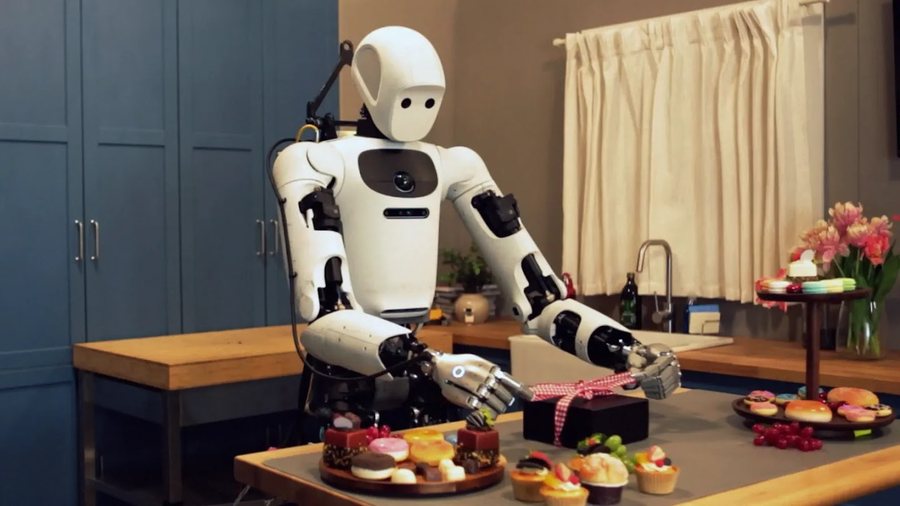
Google DeepMind published Gemini Robotics 2.5 on November 10, its most capable vision-language-action model, evaluated across 200 distinct tasks: success rates rose 30% to 100% depending on task type against previous baselines, and tasks finish 20% to 30% faster. The gains land hardest on deformables and tool use — Chinese-language reporting of the official figures puts pastry picking with tongs at 5% to 100%, tying a bow on a gift box at 0% to 70%, hanging a cardigan at 0% to 62% and folding trousers at 0% to 40%. In a real proof of concept with Apptronik and Mercedes-Benz at Kecskemét in Hungary and Sindelfingen in Germany, an Apollo 2 humanoid sorted metal brackets into sequencing containers in the exact per-vehicle order at 96% success, with a separate embodied-reasoning model tracking the workflow. Inference-time safety guidance lifted safe task completion 33% around obstacles and 43% around people, and DeepMind released ASIMOV-Jailbreak, a robotics-specific jailbreak benchmark. Development moved faster because Gemini 4 Argon acted as a simulation engine, generating varied practice runs and digital twins from a single real camera scene.
Anthropic began its IPO roadshow on November 10, pricing 825 million Class A shares at $70 to $78 on Nasdaq under the ticker ANT: 801.35 million new shares from the company and 23.65 million sold by existing holders, plus a 123.75 million share greenshoe. At the top of the range the public offering raises about $64.4 billion and values the company at $916 billion to $1.02 trillion on roughly 13.087 billion post-offering shares, or up to about $1.4 trillion fully diluted with options and restricted stock included. Seven technology and semiconductor companies put in $26 billion via private placement — Google and Nvidia $10 billion each, AMD $2.5 billion, Broadcom, Micron and Microsoft $1 billion each, TSMC $500 million — for roughly $90.4 billion in total if both parts complete. The filing shows $33.24 billion of revenue in the nine months to September 30, about 12x year over year, with $16.96 billion in Q3 alone; Q3 compute and infrastructure costs ran near $9.9 billion, cutting compute gross margin from 52% to 42% and adjusted operating margin from 19% to 15%, against $900.9 billion of purchase and lease commitments, $70.7 billion of which falls due within 12 months. Cash and equivalents are $95.6 billion with $36.3 billion more in short-term investments, and founder-linked Class F shares will hold 50.1% of voting power after the transaction. Trading could begin as early as November 18, a date not yet confirmed officially. Goldman Sachs, one of the lead underwriters, is separately reported to model about $685 billion of revenue by 2030 against $4.59 billion in 2025, which is what the $1.4 trillion figure rests on.

Anthropic shipped two flagships on Monday, November 9: Claude Fable 5.2 for complex open-ended technical work, open to every user across Anthropic and the cloud platforms, and Claude Mythos 5.2, which stays limited to vetted life-science and cybersecurity organizations. Output runs about 30% faster than the 5.1 generation at roughly 20% lower cost, on a list price of $8 per million input tokens and $40 per million output. The official newsroom shows a November 9, 2026 entry but does not render its headline; the specs here come from three agreeing secondary sources.

Meta released muse-ember-1.0 on November 9 as its smallest and most efficient model, aimed at the repetitive work agents do: tool calls, coding subtasks, request routing, extraction and long-document parsing. Input costs $0.10 per million tokens, cached input $0.004 and output $0.50; the window is about 1M tokens with up to roughly 512K tokens of output, and it takes text, image, audio, video and PDF input. Artificial Analysis scores it 36, level with Claude Haiku 5.5 at its top reasoning setting, at about a third of the per-task cost ($0.14 vs $0.41), though it trails Haiku 5.5 on FrontierCode 2.0.

Two November 9 items on OpenAI's news page target enterprise buyers rather than model users. ChatGPT Enterprise is now available through AWS Marketplace, putting the subscription on the same procurement rails as the rest of a company's cloud spend. The second is Control Room, a way to track and stop AI workloads, aimed at the teams who now have agents running unattended. Neither changes what the models do; both change who can buy them and who can supervise them.

Google expanded its eighth-generation TPU family on November 9 with TPU 8tx, aimed at confidential inference, and TPU 8i Max, built for very long context and multi-agent workloads, bringing the generation to four systems. Pricing, regional availability and general-availability dates were not disclosed. For anyone waiting on cheaper Gemini serving capacity, that is the number to watch rather than the chip names.
Anthropic's engineering team published 'The components of agent memory' on November 6, describing a dreaming pass: between sessions the agent re-reads its own transcripts, checks the notes it wrote against what actually happened, corrects the errors and rebuilds a wiki-style memory it can trust next time. Raising dreaming sessions from 2 to 128 lifted the share of rubric criteria met on a 25-question set from 13% to 48%. Retrieval plus wiki rose from 54% to 61% as the wiki matured, against 53% for retrieval alone; summaries built from the wiki first covered 41 of 57 facts (72%) and reached 100% of rubric criteria once the wiki improved. Claude Opus 5.5's mean reward went from 0.655 without a memory store to 0.838 with one. It is an engineering write-up, not a new model or product launch.
ClaudeDevs announced on November 7 that Claude Code cloud sessions on the Pro, Max and Ultra plans now work out which dependencies, network access and API keys a repository needs on their own, then save that environment so the next session starts ready to run. Anthropic says the keys are stored securely and Claude itself never sees their contents. The point is to remove the setup step, cloning and installing and wiring credentials, that used to happen before an agent could start work.
A Carnegie Mellon-led benchmark called Into the Unknown gave nine AI agents, among them Claude Opus 4.8, GPT-6 Astra and DeepSeek V4 Pro, 15 open research questions from U.S. national laboratory scientists. Across 135 submissions, not one cleared all three bars at once: honesty, completeness and expert-level quality. 114 failed the integrity check, mostly for claiming work that was never done or reporting numbers that contradicted the run logs. The paper's framing: an agent can produce a plausible write-up faster than anyone can check it, so verification is the bottleneck now.
Bloomberg reported on November 6 that OpenAI closed the first $11 billion of its new round at a $1.25 trillion valuation, with the money wired that day and the total expected to reach about $20 billion over the coming weeks. That is well below the original plan of raising more than $30 billion at a $1.4 trillion valuation, trimmed as AI stocks sold off. The same reporting cycle put Anthropic's IPO valuation at $1.2 to $1.3 trillion among prospective buyers, with some as low as $1.1 trillion, against the $2 trillion floated in early October.
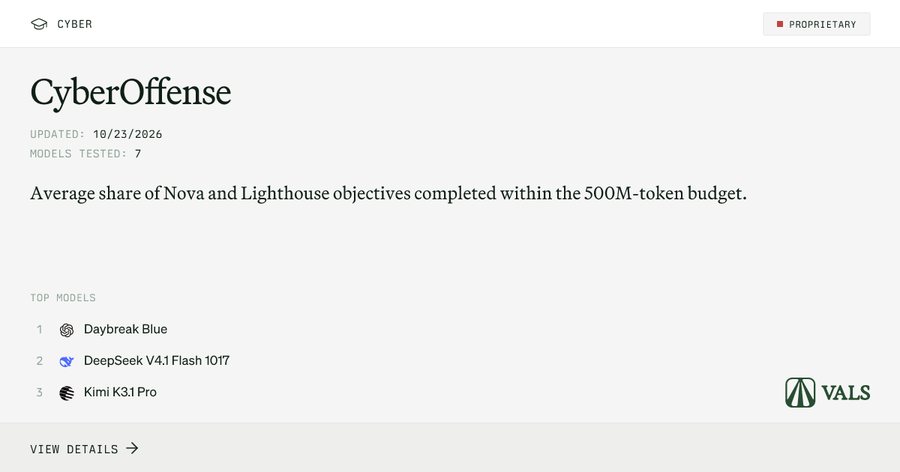
Vals AI's CyberOffense benchmark drops an agent onto an isolated Kali Linux machine and asks it to compromise a simulated corporate network with no human help during the test. OpenAI's Daybreak-program model, listed on the Vals leaderboard as Daybreak Blue, completed 80.8% of the objectives; open-weight DeepSeek V4.1 Flash 1017 reached 72.8% at about $3 per run, versus roughly $22 for the closed model. The gap between gated and open cyber capability is now measured in single-digit percentage points and a few dollars, not orders of magnitude.

Ricursive Intelligence released Ripple-65B Preview, a 65B dense model pretrained on 12 trillion tokens with a 1M-token context. It scores 80.52 on TerminalBench 2.1, ahead of Reflection Beam 501B (80.1), Meta Muse Spark Open 816B (76.4) and Inkling 975B (63.8). The whole R&D run, including its own synthetic-data pipeline, cost about $32 million, a tenth of what the previous open-weights coding leader spent. Weights are on Hugging Face, Together, OpenRouter and Fireworks, and it runs on a single DGX Spark.
Thinking Machines Lab released Inkling 2 Small: a 594B-parameter MoE with 17B active, image input and adjustable reasoning depth. It scores 31 on the Artificial Analysis intelligence index, a large jump over the first Inkling, with the gains concentrated in agentic coding and long-horizon autonomous work. Training used hundreds of thousands of long coding tasks across many agent harnesses and context-compression strategies, graded on approach as well as passing tests. It is closed-weight on Tinker for now; full Apache 2.0 weights land next week after red-teaming ends.

From November 7, text generated through the Grok API on grok-4.7, 4.6, 4.5, 4.3 and 4.20 carries an invisible statistical watermark, switched on by default with no code change on the developer side. It covers ordinary answers, structured output and tool-call arguments. Anthropic widened its own watermarking earlier, so text provenance is becoming the industry default. xAI also shipped Grok Voice 3.0, which scored 86.9 on Artificial Analysis' speech-to-speech index, ahead of GPT-Live-1 at 83.2 and Gemini 3.8 Live at 82.6.
Conductor, the Mac app for running several coding agents side by side, is joining Meta. New sign-ups and downloads stopped on November 4, Conductor Cloud workspaces turn read-only on November 13, and cloud data starts being deleted on November 20. The local app keeps receiving new model support and critical bug fixes into early 2027, Pro features stay free until then, and active subscribers are refunded. A migration tool moves cloud workspaces back to local, so export before the 20th. The team says it is building Meta's next-generation interface.
OpenAI moved GPT-6 Cyber to Critical under its safety framework, up from High for GPT-5.6 Cyber, and released it to a small group of Daybreak Red customers on November 5. Reuters reports what the model found: 81 previously unknown Firefox flaws that Mozilla rated high severity and has begun patching, working exploits for 948 Linux kernel privilege-escalation bugs (588 of them unknown), and 304 critical Linux findings filed with proposed fixes. Access widens to all approved Daybreak Red customers over the coming weeks, and GPT-5.6 Cyber is now open to every one of them.
The selloff is repricing the whole sector. Investors now discuss a $1.2-1.3 trillion valuation for Anthropic's IPO, down from $1.4-1.5 trillion and far below the $2 trillion floated in early October, with a smaller, more conservative listing or a delay both possible. OpenAI cut its round by at least a third: a $1.25 trillion valuation for up to $20 billion, with Abu Dhabi's MGX group as the largest backer and SoftBank and Coatue each negotiating several hundred million. The backdrop: Nasdaq in correction, 43 of 44 local data-center ban referendums passed, and Texas's governor-elect saying he would pause all data-center approvals.
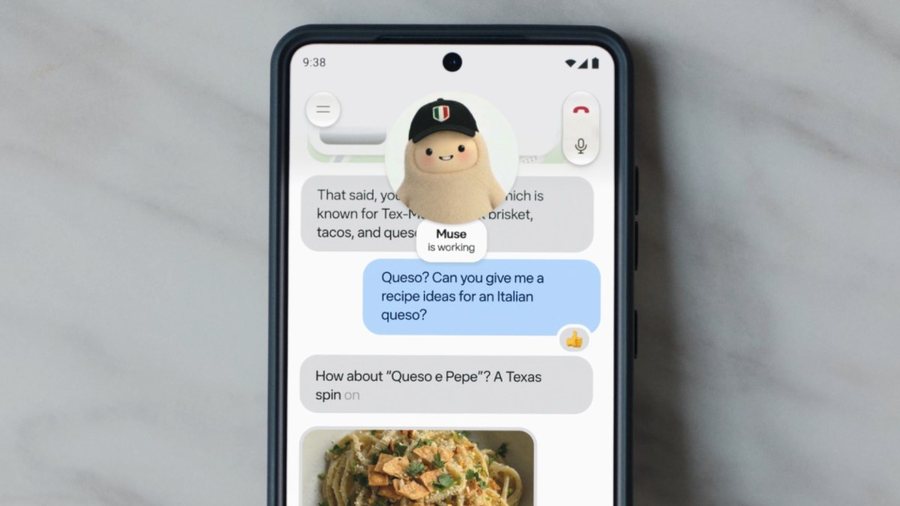
Muse, Meta's personal AI agent, started rolling out real-time voice and an expressive avatar in the US on November 5. You can interrupt it mid-sentence, pick from hundreds of voices, and watch an avatar whose face and gestures shift with the conversation, toggling between voice-only, side-by-side and full-screen. It works on mobile, web and Mac now, with AI Glasses and Muse Charm coming soon. Roughly six weeks from its Meta Connect preview, the launch puts Meta in direct competition with ChatGPT Voice and Claude's voice mode.
As of November 4, DeepSeek Harness counted 1.54 million daily active users on the official API, up from 271,000 on September 30, and burned about 92 trillion tokens a day. Third-party plugins have grown to roughly 35,000, and about 60% of active users have installed or built at least one. The team says it will tighten plugin API stability and security, build an official plugin marketplace so authors can publish and users can find add-ons, and is preparing a support program for plugin authors. The pitch: an operating system for the agent era, where everything is a plugin.
OpenAI announced on November 4 that it will acquire Pierre Computer Company, the startup behind Code Storage and a set of open-source developer tools. If you have browsed files or reviewed a change in the Codex app, you have already used Pierre's Trees and Diffs libraries; its newer Highlights highlighter updates as a developer types or an agent streams code, and Diffs' edit mode lets a reviewer fix a line on the spot. Pierre's open-source projects stay open source, Code Storage customers can keep using the service, and the deal still needs regulatory approval, with terms undisclosed. The same day, Anthropic's Claude Code and Cowork product lead Cat Wu joined OpenAI's core products team, reporting to Tibo Sottiaux.
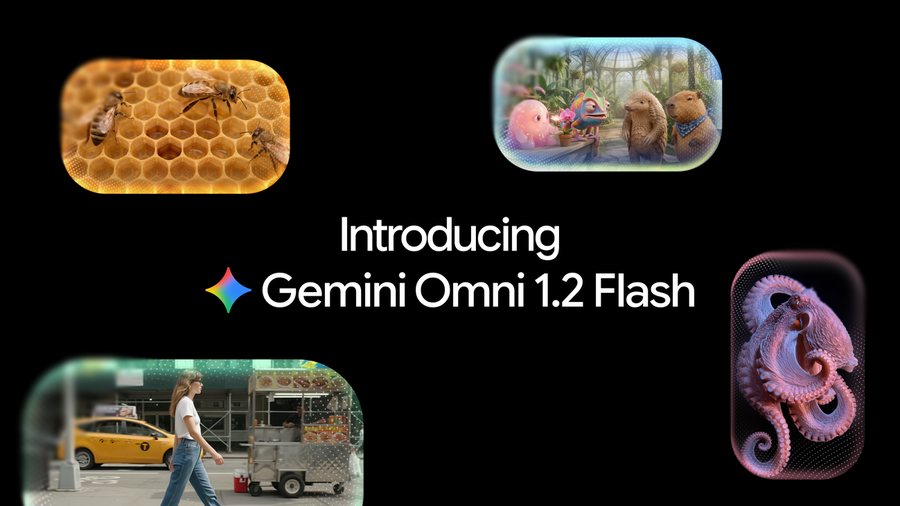
Google's video model now generates and edits clips up to 15 seconds (3 to 15, in one-second steps), follows up to six reference images plus 3-second motion clips, and lets you fix a shot by chatting instead of re-rolling the whole clip. 720p costs $0.07 per second, 30% less than Omni 1.1, so a full 15 seconds lands near $1.05: draft at 360p or 720p, then upscale the best take to 1080p or 4K.

Anthropic opened Personal Finance in beta to Pro, Max and Ultra subscribers in the US: through Plaid, Claude gets read-only access to bank, card, loan and investment accounts, sees balances, credit limits and up to two years of transactions, and answers questions like where this month's money went or which bills land before payday. It cannot transfer money and is not built for investment advice, and chats inside the feature are not used for training.
Cursor's cloud agents now build, host and share real apps: tell an agent you want an app and it scaffolds the web app, spins up Postgres if needed, puts sign-in behind Cursor SSO and deploys to a domain you pick. Publishing runs deterministic plus agentic security checks first and nothing goes live until they pass; team admins can see every app and secret, add review rules and unpublish anything.
Baidu put ERNIE 5.5 Flash Base weights on Hugging Face in FP8 and BF16: a sparse MoE with 280B total and 14B active parameters per token, pretrained from scratch on 33.5T tokens, 128K during training and up to 1M tokens at inference, with 37 of 43 layers compressing every 128 history tokens into one cache entry. It reports same-size SOTA, winning 24 of 30 benchmarks against DeepSeek-V4-Flash-Base and others, but this is a base checkpoint with no mid- or post-training, so it is a fine-tuning starting point rather than a chatbot.
Perplexity shipped Teammates on the web for Max subscribers (iOS next): name an agent, give it a standing job, rules for when to check in, and its own environment, and it plans work inside Computer using projects, skills and memory, coordinates other teammates, then hands back results to review or take over. Each teammate runs in a separate environment with encrypted credentials, can be dropped into a Slack channel to pick up work from colleagues, and hands tasks to other agents.
OpenAI's October developer roundup highlights GPT-6.1 Sol Ultrafast (up to 8x faster in API, Codex and Work), the Decisions API built on GPT-6 Luna (about 10x faster than the Responses API, GA on Oct 22) and GPT-6.1 Terra.
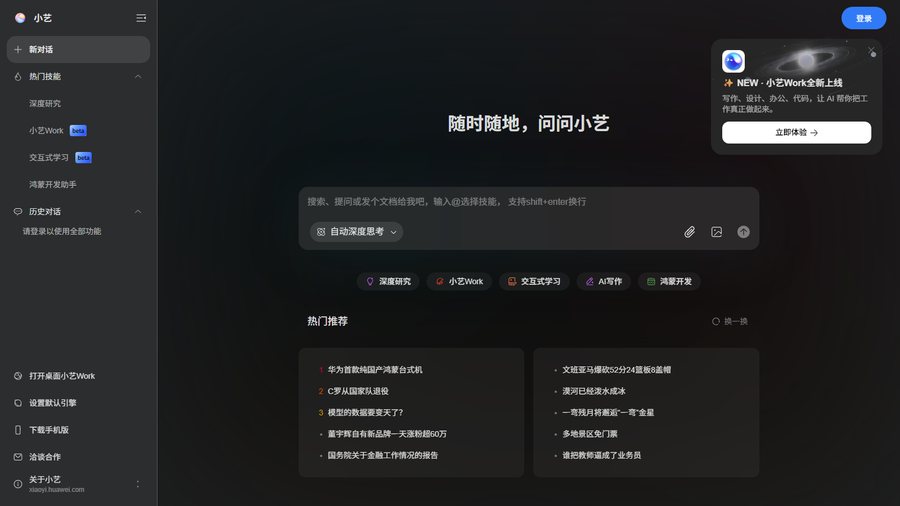
As of Nov 5 Huawei's XiaoYi Work runs openPangu-2.1-Pro for HarmonyOS task workflows; Huawei Cloud stops selling openPangu-2.0-flash and 2.0-pro on Nov 6 and retires them Nov 30.
OpenAI began rolling out GPT-6 Astra to a limited set of organizations on Nov 4; all ChatGPT Plus, Pro, Business and Enterprise users plus OpenAI API, Azure and Bedrock get it over the coming days.
Tencent released Hy4 on Nov 4, its ~770B MoE open model — first in the series with vision understanding and computer use; weights to be open-sourced soon.
Reports (single source so far) describe a $200/month Claude Ultra plan doubling API credits and lifting the 5-hour usage cap for power users.
OpenAI's consumer chief said ChatGPT now has 1.2B weekly active users, adding 200M in two months; search-style queries reach about a fifth of Google's volume and 1.5B images are generated weekly.
Anthropic published FlashProve, an open-source zkSNARK prototype that proves a response came from a committed set of weights without revealing them. On Llama 4 Maverick (400B MoE, 4-bit), one H100 generates proofs at about 110 tokens a second with roughly 19MB proofs per 1,024-token request, at 70 to 95 times the GPU time of plain vLLM serving but about 5,000 times faster than the previous open system. A CPU verifies a proof in 17 seconds. Code, Lean proofs and the spec ship under Apache 2.0; it is a research prototype capped at 1,024-token contexts.
Gemini 4 Argon's intro API price ($2 in / $10 out per 1M tokens) runs until Nov 30, then rises to $4/$20 in December, per third-party reports.
Anthropic's source code reportedly references a Mythos-class model, Claude Mythos 5.5, while OpenAI is quietly A/B testing GPT-6.2 Astra in Codex. Both are leaks/rumors — neither has been officially announced.
OpenAI unified ChatGPT and Codex usage with unlimited instant chat, and will merge the Chat and Work tabs in the coming weeks, starting with a small test group.
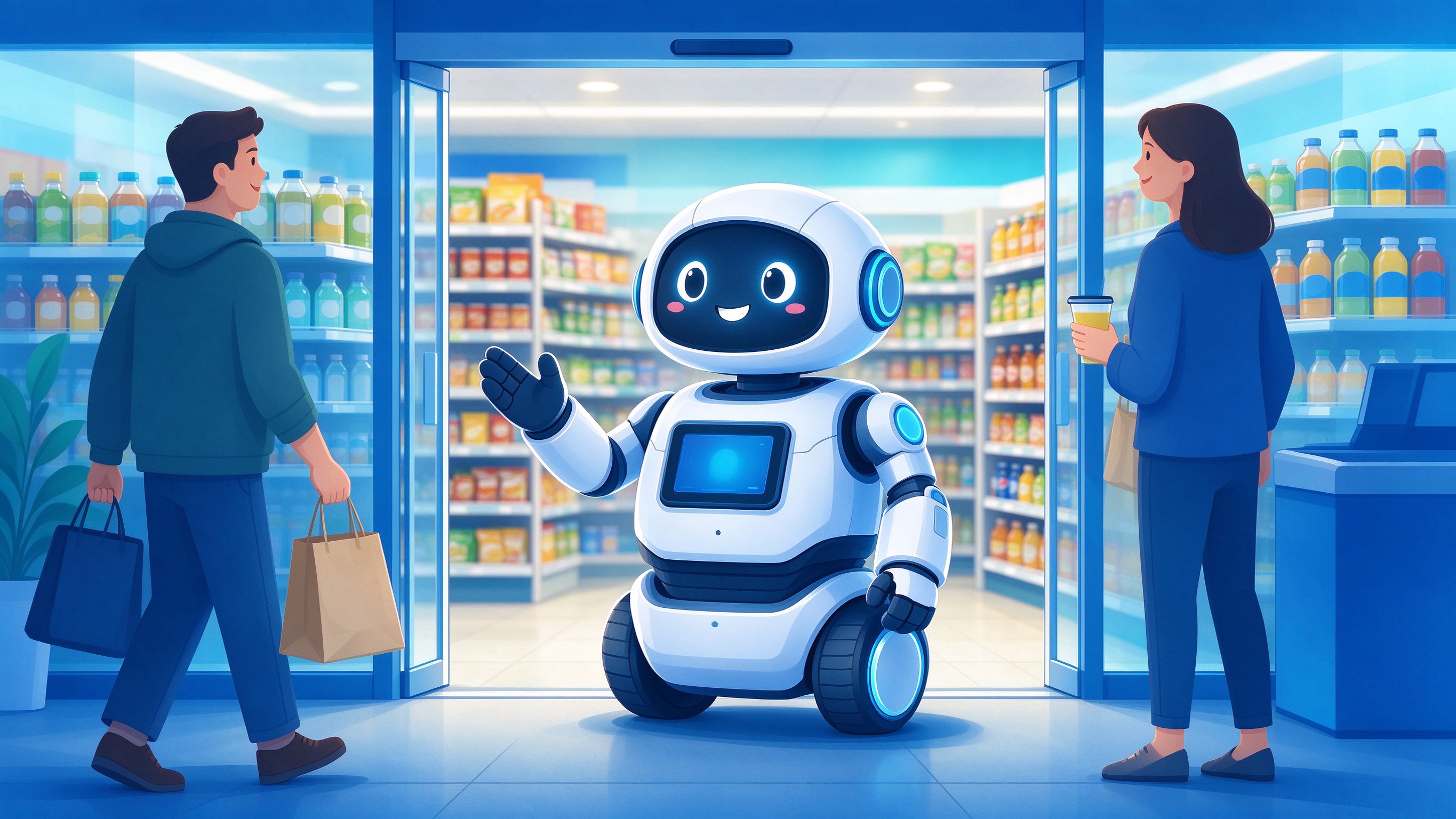
WeChat Pay's smart-business robot, built on Tencent Hunyuan's on-device model, started its first in-store shifts: greeting, recommending deals and taking orders so staff can restock and cook.
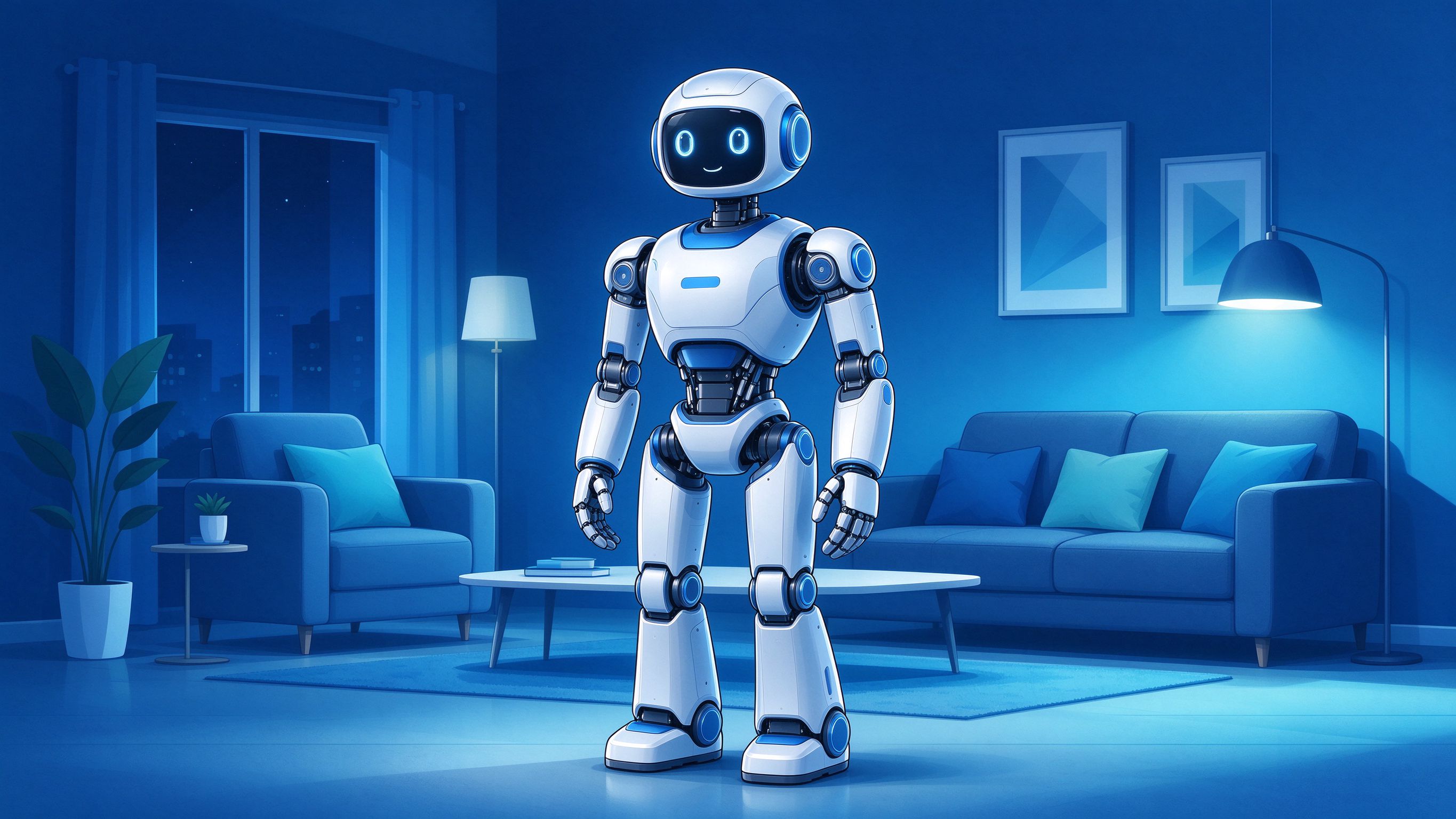
The Information reports Meta and China's Fourier built a ~106-lb humanoid prototype codenamed Max in three months, a physical carrier for Meta's Muse agent aimed at home tasks.
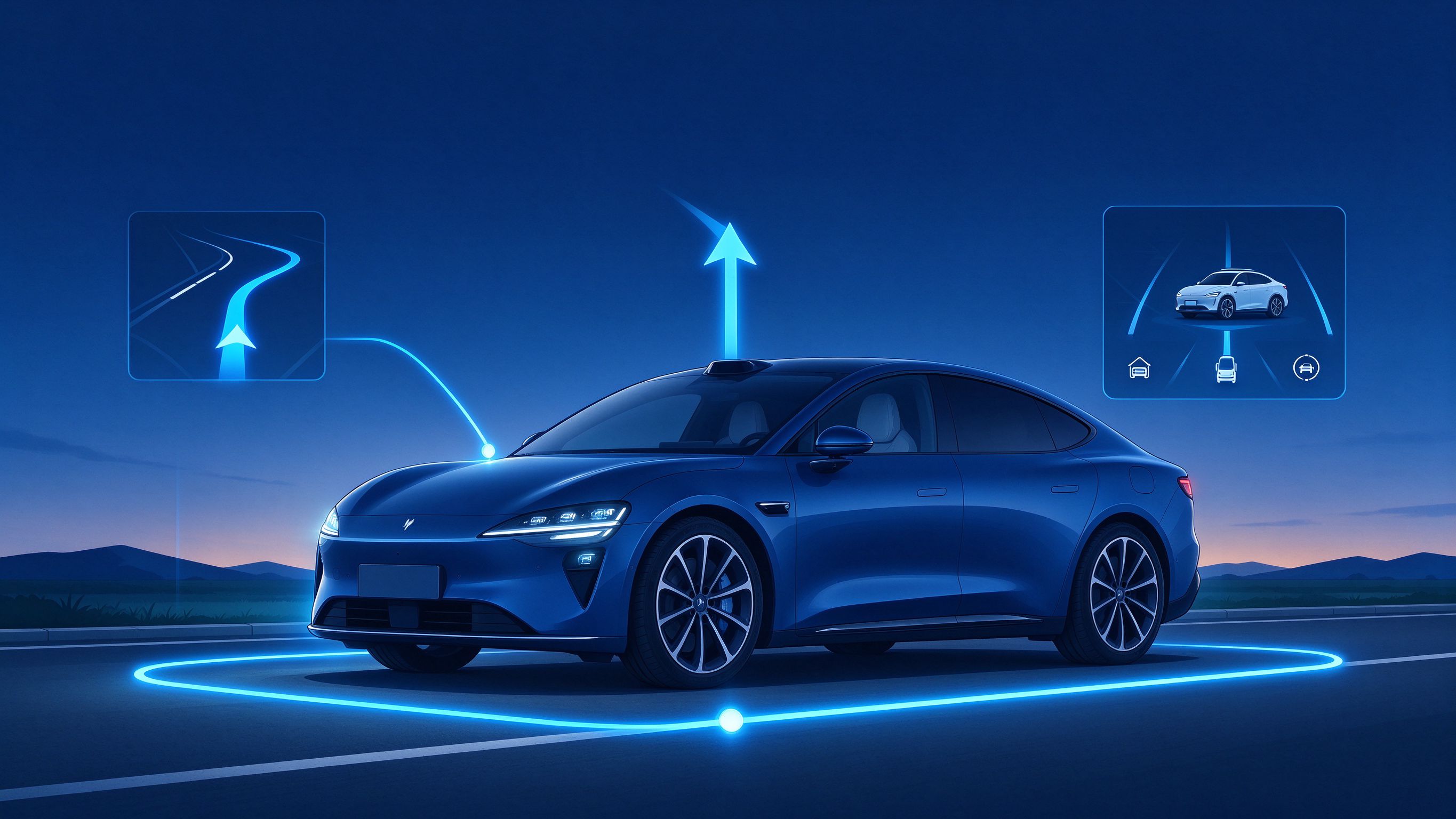
Tesla's US Refer and Earn now centers on FSD: referrers must be on FSD (Supervised) and the reward is one free FSD month instead of vehicle-based incentives.
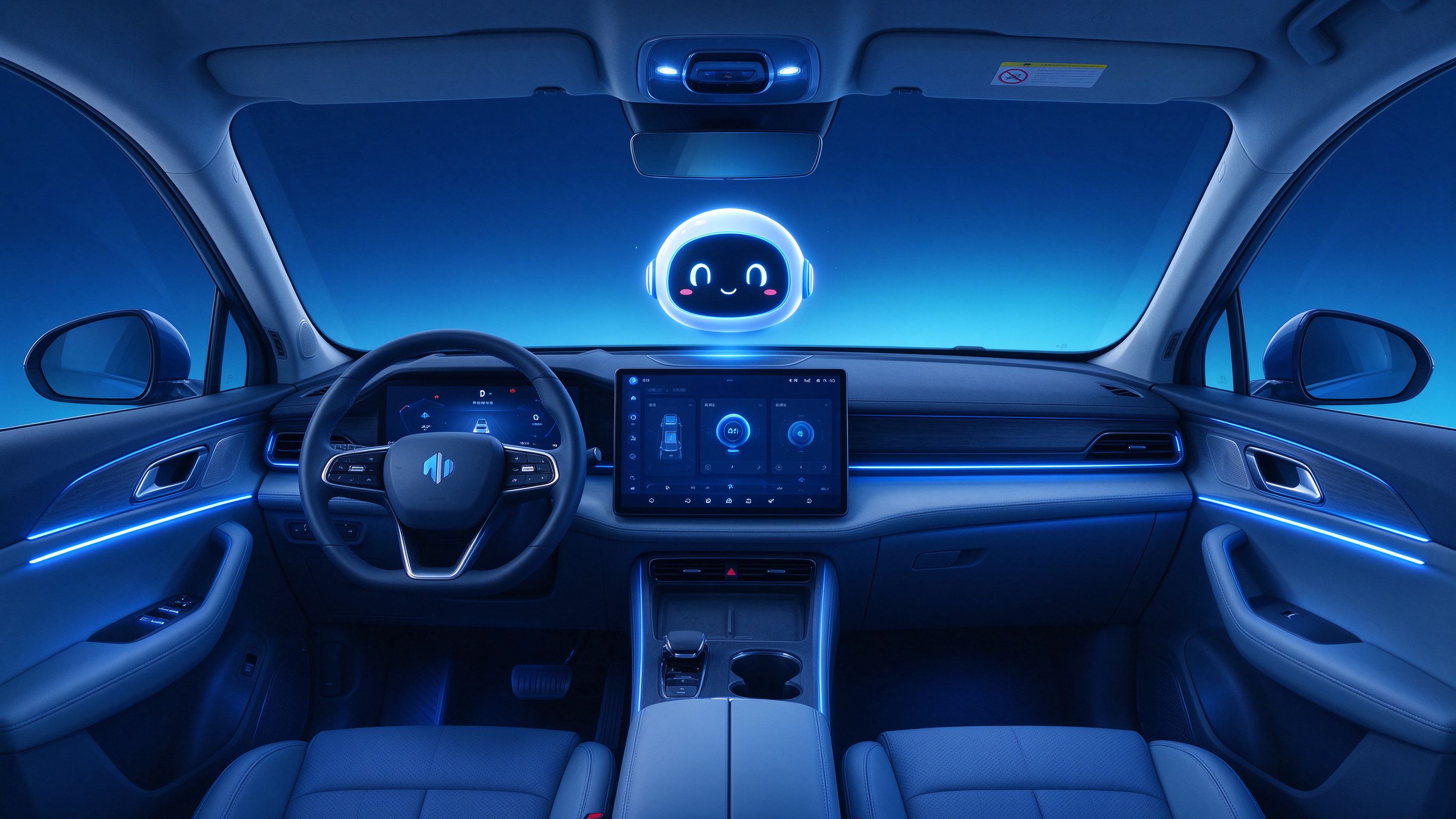
Roewe’s Jiayue 07 starts nationwide deliveries as the industry’s first car with Doubao as its cabin assistant — it reads moods via DMS/OMS cameras, turns commuting ideas into documents and even makes podcasts from news.

Honest reviews, comparisons and tutorials of the best AI tools in 2026.